IVF/ ICSI     |     IUI- Intrauterine Insemination     |     Endoscopic Surgery     |     Maternity And Delivery     |     Adolescent Health And Counselling     |     Pre Marriage Counselling     |     Pre Conception Counselling     |     Ultrasonography     |     Recurrent pregnancy loss     |     Cancer Screening     |     Well Woman checkup

Gynecological & Fertility Patient Outreach

  • Home
  • Patient Outreach & Health Guide
1. Fertility & Modern Lifestyle

Late Work Hours & Conception: When Should You Actually Consider IVF?

Between peak-hour local trains, high-stress corporate deadlines, and late marriage ages, starting a family in Mumbai often gets pushed back. But when month after month goes by without a positive test, how do you know it’s time to seek advanced help?

  • Under 35 Years Old: Consult a fertility specialist after 12 months of regular, unprotected intercourse without conception.
  • 35 Years or Older: Seek evaluation after just 6 months. Ovarian reserve declines more rapidly after 35.
  • Immediate Evaluation: Recommended right away if you have irregular or absent cycles, severe period pain (endometriosis), recurrent miscarriages, or prior pelvic surgery.

Modern IVF is no longer an intimidating, mysterious process. With individualized stimulation protocols, vitrification (advanced rapid-freezing technology), and pre-implantation screening, reproductive medicine offers high success rates tailored to fit into an active, demanding lifestyle.

A simple baseline consultation—including an Anti-Müllerian Hormone (AMH) test and high-resolution pelvic ultrasound—gives you a clear roadmap. Book your confidential fertility evaluation today.

Late Work Hours & Conception: When Should You Actually Consider IVF?
2. Minimally Invasive Care

Keyhole Surgery (Laparoscopy): Healing Without Weeks Off Work

For many working women in Mumbai, taking 3 to 4 weeks off work for open gynecological surgery simply isn't an option. Whether you are dealing with ovarian cysts, uterine fibroids, or chronic pelvic pain from endometriosis, minimally invasive endoscopic surgery has transformed recovery.

  • FOGSI Clinical Consensus: Laparoscopic and hysteroscopic procedures significantly reduce post-operative pain, lower surgical infection risks, and minimize internal adhesions compared to open laparotomy.
  • Rapid Healing & Discharge: Most patients are discharged within 24 to 48 hours and return to routine desk work and light commuting in days, not weeks.
  • Cosmetic & Precision Benefits: Tiny incisions (5mm to 10mm) result in negligible scarring and superior visualization of pelvic anatomy using high-definition camera systems.

You don’t have to live with debilitating monthly pain or delay necessary surgical treatment out of fear of major surgery.

Wondering if your fibroid, cyst, or endometriosis can be treated through a keyhole procedure? Schedule a surgical evaluation to explore your minimally invasive options.

3. Preventive Oncology

The 10-Minute Check That Prevents Cervical & Breast Cancer

In Mumbai's daily rush, preventive health checks often fall to the bottom of the to-do list. However, gynecological cancers are among the few cancers that can be caught in pre-cancerous stages or cured when detected early.

  • Cervical Cancer Screening (ACOG Guidelines): Women aged 21–29 should have a Pap test every 3 years. For women aged 30–65, guidelines recommend high-risk HPV co-testing every 5 years (or a Pap alone every 3 years).
  • Breast Health Protocols: Annual clinical breast examinations, paired with screening mammograms starting at age 40 (or earlier if there is a strong family history of breast/ovarian cancer).
  • HPV Vaccination: Recommended for adolescents and young adult women to prevent the high-risk HPV strains responsible for over 70% of cervical cancers worldwide.

A routine preventive screening appointment takes less time than finding parking at a mall, yet it provides years of peace of mind.

If your last Pap smear was more than three years ago—or if you have never had one—book your preventive wellness check today.

4. Holistic & Empathetic Care

Beyond the Ultrasound: Why Emotional Support Matters in Reproductive Health

Whether you are navigating a prolonged fertility journey, coping with an unexpected gynecological diagnosis, or facing recurrent pregnancy loss, physical treatment is only half the picture. The emotional toll of fertility treatments and chronic pelvic conditions can strain relationships, work performance, and mental well-being.

  • ACOG Committee Recommendations: Integrating psychological and clinical counselling into reproductive care reduces patient distress, enhances treatment adherence, and promotes better clinical outcomes.
  • Safe, Medically Grounded Space: Clinical counselling offers a non-judgmental environment to understand complex diagnoses, weigh treatment pathways, and manage procedural anxiety away from societal pressures.
  • Couple-Centric Support: Reproductive challenges affect both partners; structured counselling helps couples navigate emotional stress and align on treatment goals together.

Compassionate clinical care treats the whole person, not just a medical chart or laboratory test.

You do not have to carry the emotional burden alone. Speak with our empathetic clinical team for a holistic, supportive consultation.

5. Menstrual Health Signs

Heavy Bleeding & White Discharge: When Is It Time to Stop Ignoring It?

It is easy to normalize abnormal symptoms—dismissing painful periods as 'just cramps' or frequent vaginal discharge as 'just Mumbai humidity.' But your menstrual cycle is a direct vital sign of your overall gynecological and systemic health.

  • Abnormal Uterine Bleeding (AUB): Soaking through one or more pads per hour, passing large blood clots, or bleeding between cycles requires structured clinical workup as outlined by ACOG and FOGSI.
  • Persistent Pelvic Pain: Severe dysmenorrhea (painful periods) or deep pain during intercourse frequently points to treatable underlying conditions like endometriosis, adenomyosis, or pelvic inflammatory disease (PID).
  • Recurrent Vaginal Infections: Itching, foul odor, or persistent unusual discharge requires precise microbiological swab identification rather than over-the-counter intimate washes, which disrupt protective vaginal flora.

Early clinical intervention prevents minor hormonal or infectious issues from escalating into chronic pelvic problems.

Stop putting up with persistent pain or discomfort. Book a consultation today to pinpoint the cause and find lasting relief.
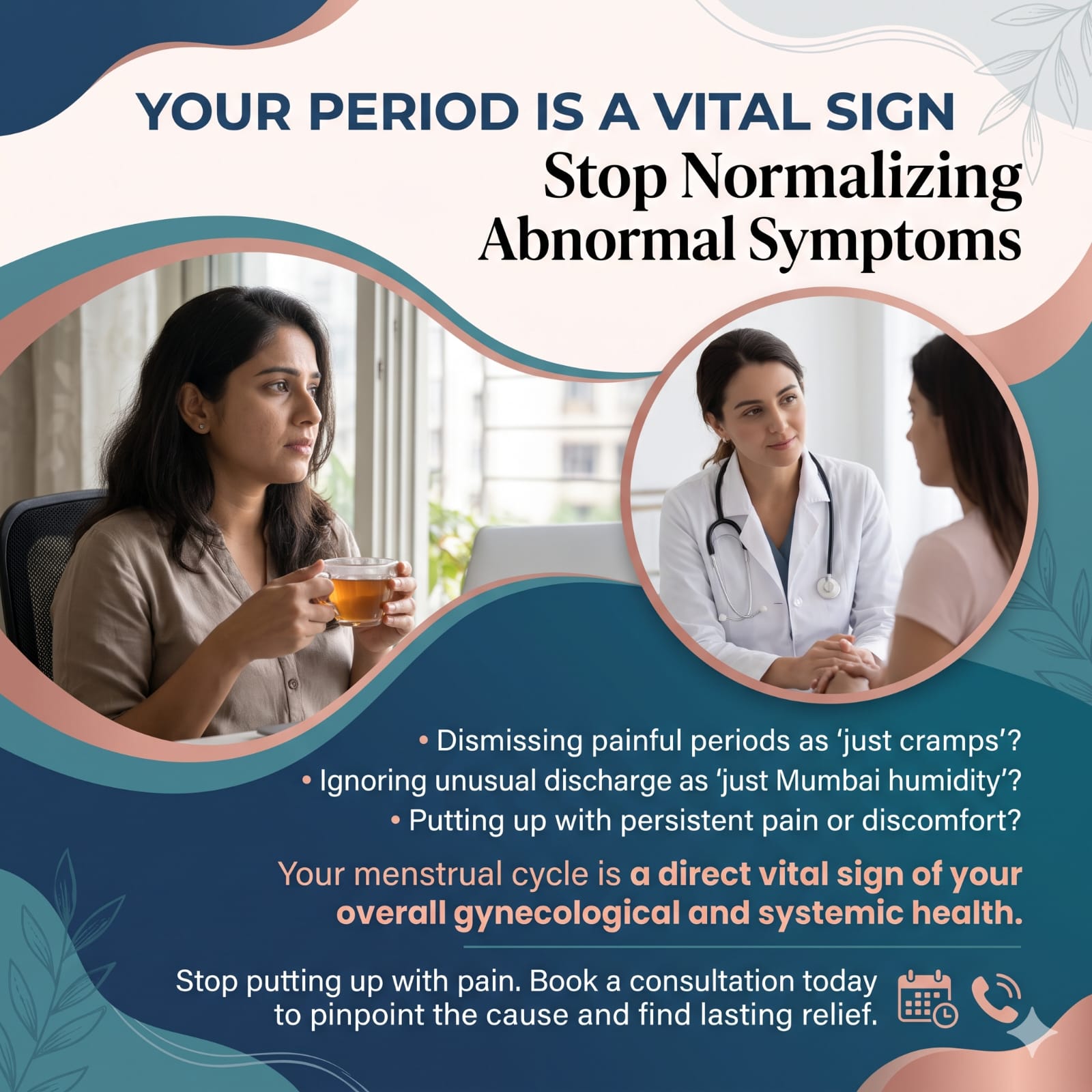
Your Period Is a Vital Sign: Stop Normalizing Abnormal Symptoms
6. Hormonal & Metabolic Health

Battling PCOS in the City: Irregular Cycles, Stubborn Weight, and Acne

Polycystic Ovary Syndrome (PCOS) is exceedingly common among young women in urban India, exacerbated by chronic stress, irregular sleep patterns, and sedentary desk jobs. If you are noticing sudden weight gain around the abdomen, persistent cystic acne, or skipped cycles, it isn’t a cosmetic flaw—it is a metabolic and hormonal condition.

  • The Rotterdam Diagnostic Criteria: PCOS is confirmed by the presence of at least two of three criteria: irregular/absent ovulation, clinical or biochemical hyperandrogenism (excess facial hair, acne), and polycystic morphology on ultrasound.
  • Insulin Resistance as the Root Driver: FOGSI guidelines highlight that hyperinsulinemia drives excess androgen production from the ovaries, causing cycle disruption and weight retention.
  • Evidence-Based Management: First-line therapy is structured lifestyle modification—a modest 5–10% reduction in body weight restores ovulatory cycles, supported by insulin sensitizers (e.g., Inositol or Metformin) when indicated.

Generic social media crash diets won't resolve PCOS. A customized medical approach tailored to your metabolic and hormonal profile will.

Get your hormones back in sync with an evidence-based PCOS management plan. Book an appointment with our specialist clinic today.

7. Midlife & Menopausal Wellness

Hot Flashes, Brain Fog & Mood Swings: Navigating Menopause in Your 40s & 50s

For many Indian women, the transition into perimenopause begins in their late 40s—yet it remains one of the least discussed phases of life. Experiencing night sweats, sudden hot flashes, interrupted sleep, mood volatility, or sudden vaginal dryness is neither 'all in your head' nor something you simply have to endure in silence.

  • FOGSI & ACOG Consensus: Recommends comprehensive evaluation of menopausal symptoms, including bone mineral density (DEXA) assessment and cardiovascular risk profiling.
  • Menopausal Hormone Therapy (MHT): When initiated within 10 years of menopause or before age 60, modern bio-identical MHT is recognized by clinical guidelines as highly effective and safe for vasomotor relief and osteoporosis prevention in appropriately screened women.
  • Non-Hormonal & Lifestyle Options: For women with contraindications or personal preference, non-hormonal pharmacotherapy, pelvic floor rehabilitation, and targeted nutrition provide meaningful relief.

Menopause marks the beginning of an empowering new chapter, and with modern clinical care, it can be healthy, comfortable, and symptom-free.

Don't let menopausal transitions disrupt your vitality and focus. Schedule your comprehensive midlife wellness consultation today.

Hot Flashes, Brain Fog & Mood Swings: Navigating Menopause in Your 40s & 50s

Start Your Wellness & Fertility Journey Today

Consult with our expert specialists, Dr. Tejal Poddar and Dr. Shreedevi Tanksale, across our clinics in Charni Road, Vile Parle, Juhu, and Andheri.